
Registration Links (5 Options)
ONC-ORG

Survivorship Stories

Verified journeys from people who have faced cancer — shared to give others hope.

Mohammed Rebec

Mohammed Rebec's Journey

Mohammed Rebec · Riyadh, Saudi Arabia · Nov 11, 2026

As an American citizen residing in Saudi Arabia, I am sharing my independently developed approach and successful personal experience in reducing debilitating dermatological side effects associated with targeted lung cancer medication. My journey of discovery of how to reduce my cancer medication's debilitating side effects began with my being diagnosed with stage 4 non-small cell Exon-20 type lung cancer. in July 2024. Luckily for me, the FDA had just approved Johnson & Johnson's biological targeted Exon 20 lung cancer therapy, Amivantamab. I responded very well to the infusion- based treatments and I was stage 1 cancer within a few months of the successful series of treatments. After achieving this goal, I started receiving a maintenance dose of 1750 mg Amivantamab, via infusions, every 3 weeks, at KFSH in Riyadh. The only drawback to this life-saving therapy was that Amivantamab, in addition to treating the cancer also induced severe paronychia which attacks the patient's skin as well as fingernails and toenails causing never-ending small open wounds, all the time. These open wounds bleed sporadically and uncontrollably. The other common dermatological side effect that Amivantamab causes are acute acneiform which manifests itself in the form acute rashes on the face, chest and back. Taking antibiotics for more than 2 or 3 weeks is counter-productive because the medication disrupts the patient's levels of AST and ALT. If these levels are abnormal, the cancer patient has to forego the infusion sessions until his/her liver enzymes are back to normal. That could mean missing 1 or more lifesaving Amivantamab anti-cancer infusions. I embarked on a 17 months -long experiment to see if I could discover a safe and sustainable way to reduce Amivantamab's disfiguring and always- painful side effects while keeping up the efficacy of the life-saving medication- which I would have to keep taking every 3 weeks as a maintenance dose to keep my cancer under control. In May of 2025 I asked that my dose of Amivantamab be reduced to the next level down-1400 mg. Within several weeks I noticed an improvement in the paronychia dermatological side effects. The degree of pain had lessened and there was less sporadic bleeding. After 9 weeks at this new lower dose I got a PET scan of my lungs, including the remaining lesion in my left lung. The radiologist's report said that everything was ok and that my lesion was now a little reduced in size On September 2025 I started the lowest dose that was possible, 1050 mg to take in my 3- weekly infusions which have continued to the present. After about 7 weeks I noticed further improvement of the paronychia side effects in the form of the lessening of the strength of the dermatological side effects. the rashes on my chest and back reduced in scope and strength. My fingertips and toes bled less frequently and stopped bleeding more quickly. I also no longer needed to take pain killer pills as the constant pain in all my fingertips and most toes subsided. Overall, my side effects dropped to about 50 percent of what they were when I was taking the higher dose of 1750 mg. In addition, the PET and CT scans showed no change in the lesion on my lung. It was stable and the cancer was under control. In July 2026 I decided to try going to HBO sessions to see how much more I could reduce the side effects of taking Amivantamab. After 6-7 sessions of 2 hours each, I was seeing even more improvements. The redness and high sensitivity of my fingertips had largely disappeared. Three months after adding the 2-3 times weekly HBO sessions on top of the lowest dose of 1050 mg of Amivantamab has resulted in a dramatic change for the better of all the side effects. I have noticed an 80% + improvement in all paronychia and acute acneiform dermatological side effects. My Oncologist and My regular Amivantamab infusion nurse both noticed the big improvements. They said that there was no Amivantamab patient they knew, out of hundreds that he had seen who had next to no visible dermatological side effects and no need of antibiotics or daily pain killers. I am able to make the following recommendations to achieve significant reductions of the dermatological side -effects with a high degree of confidence.
Read Full Story80 comments
Jamal Islam
Leukemia

I Will Survive — A Memoir of Courage Beyond Cancer

Jamal Islam · Moradabad, Uttar Pradesh · Oct 15, 2026

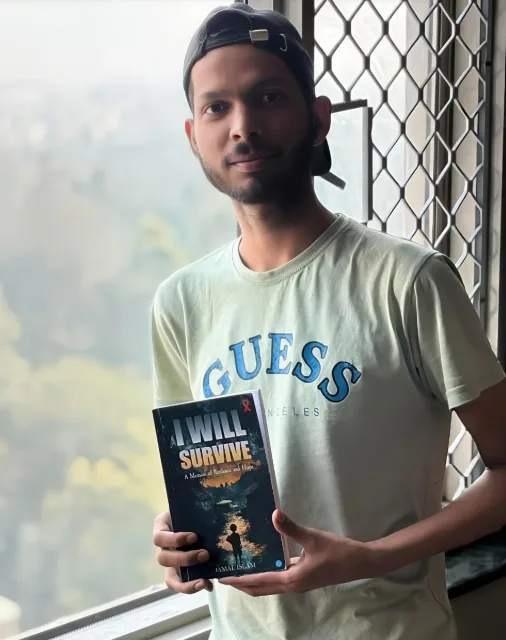
Jamal Islam is a storyteller of resilience, a student of life, and a warrior of the spirit. Born on March 20, 2004, in 2024, Jamal faced his greatest challenge yet: a diagnosis of Acute Lymphoblastic Leukemia. What followed was a grueling “chemical assault” of chemotherapy and moments of near-fatal medical crises. Yet, it was in the sterile halls of hospitals that Jamal found his true calling. Refusing to be defined by his illness, he picked up his pen to transform his pain into a “toolbox for the soul.” Many see a patient; I see a storyteller. I have written my heart into these pages so that they might serve as a toolbox for your soul. I do not want charity; I want a legacy. By reading my books, you aren’t just supporting a cause—you are witnessing a victory of the spirit. Your engagement with my work is the greatest gift I could receive. I Will Survive - A Memoir of Courage Beyond Cancer (Author of this Book , Jamal Islam) The Veil of Fate: When Faith Meets Divine Destiny (Author of this Book , Jamal Islam) Website: https://authorjamalislam7.com/ I am a TALL patient diagnosed in 2024. Now I underwent Bone Marrow Transplant. Currently I am in recovery from the disease and all reports are negative.

Read Full Story10 comments
RAMENDRA KUMAR
Colorectal

MANAGING EVERY TUMOUR WITH HUMOUR

RAMENDRA KUMAR · Bengaluru · Oct 11, 2026

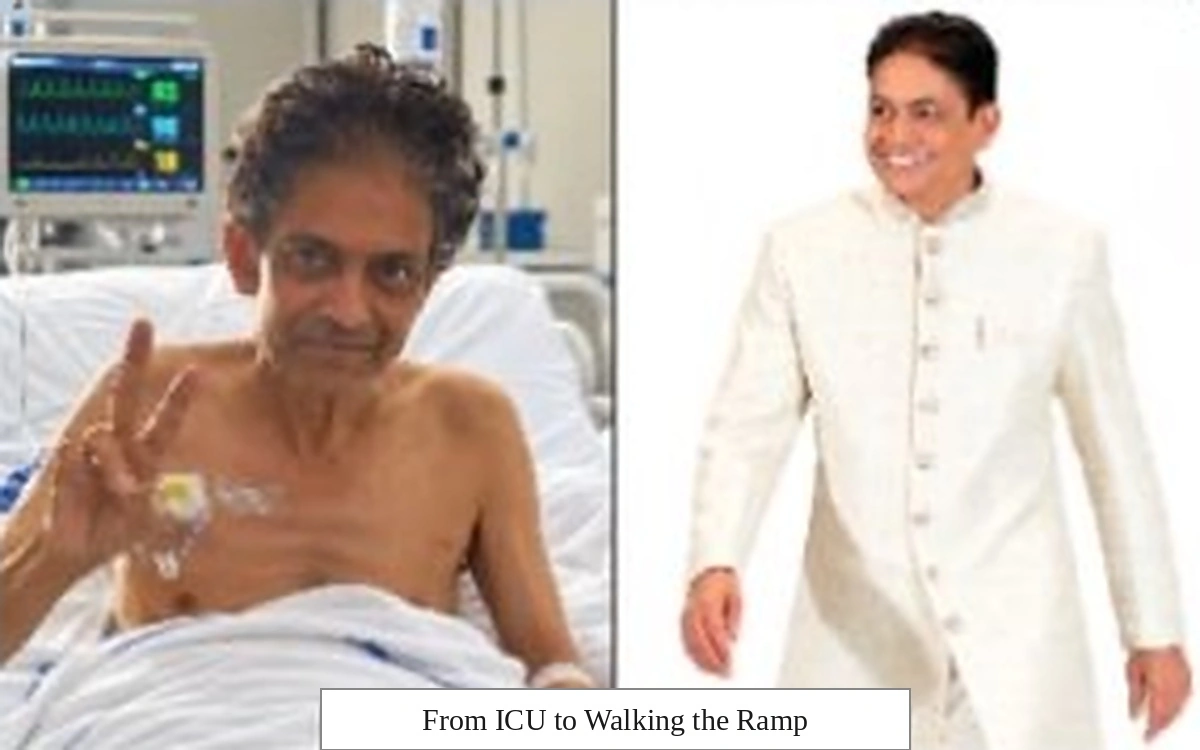
Diagnosed: 2021 In remission since: 2022-11-25 I was diagnosed with colon cancer in November 2021. What followed was a nightmare that neither I nor my family could have imagined. I underwent four major surgeries, suffered three septic shocks, spent 40 days in the ICU and endured several rounds of chemo and radiation. My entire large intestine had to be removed and left with a permanent stoma. There were times when survival was uncertain. It was an incredibly difficult period, not only for me but also for my wife Madhavi, our children Ankita and Aniket, and our friends. What kept me going was the support of my family, my writing and storytelling, and my belief in 'Managing Every Tumour With Humour'. I was declared cancer-free. Life, however, has not returned to what it was before. I continue to live with an ostomy bag, an insulin pump, and various health challenges. But I didn't let any of that stop me from doing what I love: conducting workshops, delivering motivational talks, and taking the stage several times a week. On 3 October, I was crowned 'India Cancer Warrior'. For someone whose dream was to walk the ramp, winning that title was a dream come true. What I enjoy most is sharing my story to connect with people and celebrate life. Lessons cancer taught me: Never take life for granted. Before cancer, I was an active person, busy with corporate life and public speaking. Suddenly, I found myself completely dependent on others for even the simplest tasks. It made me realize how vulnerable we human beings are, and it helped me discover a reserve of inner strength I never knew existed. Living with an ostomy became a reality, and adapting to it meant life was no longer lived the way I once did. But there is still so much to look forward to and achieve. The physical consequences remain, but I face each day with courage and a smile. Advice to other cancer patients: To anyone battling cancer or going through a crisis, here are my suggestions: 1. Don't lose your sense of humor. When things go wrong, laughter can be the best medicine. A sense of humor helps you see beyond the pain and gives you hope. 2. Pursue your passion: music, painting, gardening, cooking, writing. It will keep your mind occupied and productive, and help prevent anxious thoughts from taking over your headspace. 3. Build meaningful relationships: nurture bonds with family and friends. Open your heart to loved ones. Every moment is precious, a gift to be cherished. 4. Be optimistic: attitude is everything. Positivity creates an ecosystem of hope, strength and healing.

Read Full Story21 comments
Stage 3 Ovarian Cancer

About Laura Cooper’s Cancer Survivorship.

Laura Cooper · Moorestown NJ · Oct 5, 2026

Laura Cooper of Moorestown, NJ is one of my heroes. I always defined heroism by witnessing someone who battles and overcomes an enemy I would find daunting. And I’m a tough guy. After twenty years of battling cancer, Laura is thriving today, giving back to her community, her friends and her family with grace and profound appreciation. In 2006, at the age of forty-two, she was diagnosed with Stage 3 Ovarian Cancer. But, her cancer was dismissed as a harmless cyst because someone failed to read the entire medical report. There’s a reason to always seek a second opinion when a problem persists. In 2008, her cancer returned wrapped around her spine. She was told by a world-renowned health system to get her affairs in order, but she got a second opinion. Surgeons at Memorial Sloan Kettering Cancer Center in NYC performed a very complex procedure, and removed as much of the tumor as safely possible without causing neurological damage. Thirty rounds of radiation followed, leading to nerve damage in her leg. There’s a reason to always seek a second opinion. In 2020, her annual mammogram, ultrasound and biopsy revealed Triple Negative Breast Cancer. She underwent a mastectomy, reconstruction and eight rounds of chemotherapy. And life for Laura goes on. In 2024, a small microscopic pancreatic cancer cell was discovered, leading to Whipple Surgery, followed by six rounds of chemo. For the average reader the Whipple procedure involves surgery to remove tumors from the head of the pancreas, duodenum, gallbladder, or bile duct. It typically takes four to six hours, with a one to two weeks stay in the hospital, and close to six months of recovery. Because the Whipple procedure involves removing parts of the pancreas, small intestine, and stomach, the digestive system is permanently altered. Laura had to make dietary and bowel changes, because of the way the body breaks down food. In addition she experienced lingering weakness and low energy. But she was prepared to continue her fight. Laura reminded me how she survived by surrendering. This got my attention. Thirty years ago, I read a book called The Seat of the Soul by Gary Zukav. One of the topics included surrendering. Surrendering is not failure nor is it giving up. It is the ultimate act of courage. It means releasing your ego's exhausting need to control every outcome and trusting in a higher wisdom. In the Seat of the Soul, this yielding replaces fear-based resistance with deep resilience, allowing one to move through life with authentic power. It’s a true use of power. I applaud Laura. She’s learned to face hardships with a smile, and to never take her health for granted. She is a living testament to the power of hope, earned by never yielding and leaving everyone around her in awe. The reason ONCORG publishes articles like these is to inspire others and turn Laura’s triumph into a beacon of hope for many. Her struggles did not come without a human perspective. She hid her pain and depression from her children. She sent them to school, slept until they returned, and pretended she was cooking and cleaning. This is very common among mothers. My mother Ivy had cancer twenty-two years ago, and confided about her disease only to her sister, but not me. She did not want me to worry. Eventually I learned of her struggles from my Aunt Marion. I was so angry about this, but eventually resigned to the fact that two sisters were entitled to keep a secret. Laura wanted to protect her children as best as she could. Just like my mother did. The Moorestown, NJ community has rallied around Laura and her husband Brian. Her neighbors occasionally raked the leaves and cleaned their yard. Many meals were delivered to their house, and her mother took care of the children. Yes, it does take a village. Laura’s fight will never end. Because of the massive amounts of radiation and chemo, every joint needs to be replaced. Her vascular necrosis does not end there, The bone structure in her mouth is compromised and she will need oral surgery. She stopped counting surgeries after eighteen. Yet, despite all of this, she gets up every day and takes care of those with greater needs than herself. She helps seniors, and believes this is God’s plan for her. This is power with a purpose. The financial strain on Laura and Brian is immense. She recalls with guilt the times when she could not afford to send her kids to Lacrosse camp, so they could have some fun with their friends. Sometimes she struggles with her memory caused by her medication. This should come as no surprise to our readers. Throughout all of this Laura Cooper knows she is blessed. Her children are grown and she looks forward to seeing her three loving grandchildren. I hope this article inspires our readers to recognize and admire the power in her survivorship. Although a cancer diagnosis feels insurmountable, continuing to fight is about reclaiming your tomorrows.

Read Full Story10 comments