Oncogenes Definition
Oncogenes are mutated or abnormally activated forms of normal genes called proto-oncogenes that promote
uncontrolled cell growth, proliferation, and survival. When proto-oncogenes undergo genetic alterations such as mutations,
gene amplification, or chromosomal translocations, they become oncogenes and can drive the development and progression of
cancer.
Under normal conditions, proto-oncogenes regulate essential cellular processes, including cell division, differentiation, growth, and apoptosis.
However, when converted into oncogenes, they produce proteins that are continuously active or overexpressed, causing cells to divide
uncontrollably even in the absence of normal growth signals. This uncontrolled proliferation is a hallmark of cancer.
Key Characteristics of Oncogenes
Derived from proto-oncogenes through genetic alterations.
Promote uncontrolled cell proliferation.
Produce abnormal or overactive proteins.
Function in a dominant (gain-of-function) manner, meaning a mutation in a single allele is often sufficient to contribute to cancer.
Contribute to tumor initiation, progression, angiogenesis, invasion, and metastasis.
Mechanisms of Oncogene Activation
Point mutations that increase protein activity.
Gene amplification resulting in excessive protein production.
Chromosomal translocations creating fusion proteins or placing genes under strong promoters.
Insertional mutagenesis by certain viruses.
Common Oncogenes and Their Functions
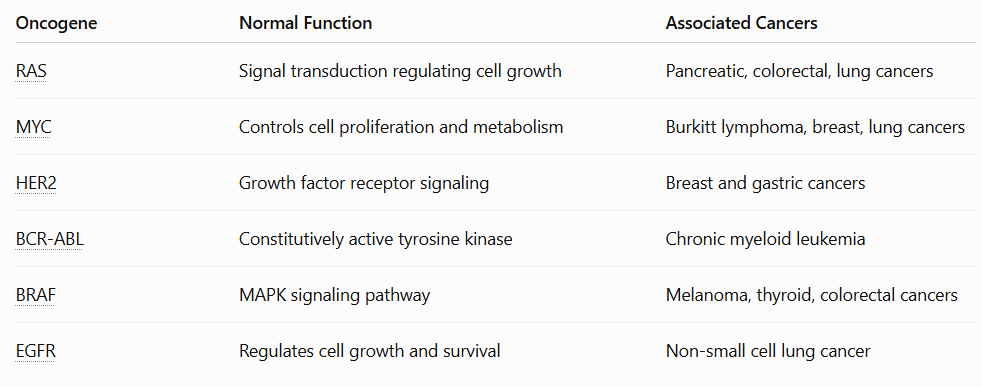
Oncogenes are cancer-causing genes formed when normal proto-oncogenes become abnormally activated through genetic alterations.
Their activation leads to continuous growth signaling, uncontrolled cell division, resistance to apoptosis, and ultimately
contributes to the initiation and progression of cancer.